
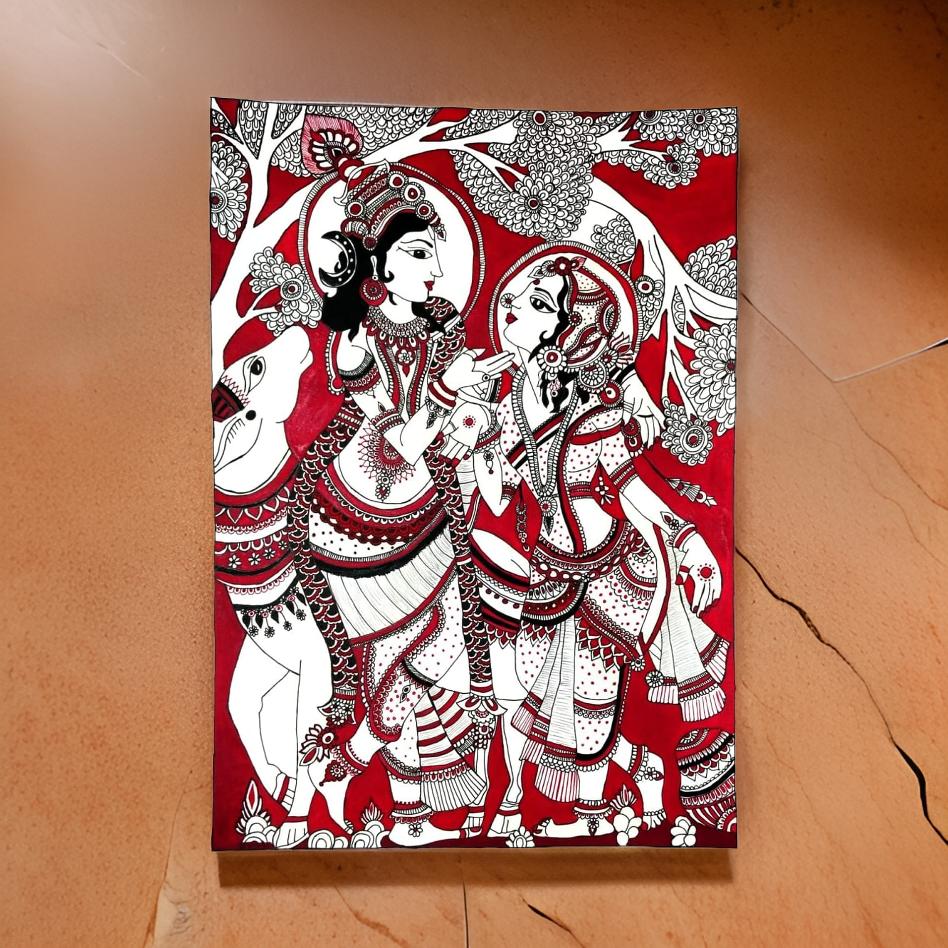
Long before it hung in galleries or decorated modern homes, Madhubani painting was a living tradition — practiced by women in the villages of Bihar’s Mithila region, painted on the mud walls of homes to mark festivals, weddings, and everyday devotion. Today, that same tradition lives on canvas and paper, and it’s one of the most distinctive art forms you can bring into your home. Here’s what makes Madhubani painting special, and how to choose and care for a piece of your own.
A Tradition Older Than Most Art Movements
Madhubani art — also called Mithila painting — traces back centuries in the Mithila region of Bihar, India, traditionally passed down from mother to daughter. It was originally painted directly onto freshly plastered mud walls and floors using natural dyes and pigments, made with materials like turmeric, indigo, and charcoal, applied with twigs, brushes, or even fingers. The tradition only moved onto paper and canvas in the 20th century, which is what makes it possible to hang a piece in your own home today.
What Makes Madhubani Art Instantly Recognisable
- Bold outlines filled with intricate patterns. Figures — human, animal, or deity — are drawn with strong double-line borders, then filled with geometric patterns, dots, and cross-hatching that leave almost no blank space.
- No shading, only pure colour. Traditional Madhubani doesn’t use gradients or shading — colours are applied flat and vivid, which is part of what gives the style its striking, graphic quality.
- Recurring symbolic themes. Common motifs include fish (prosperity and fertility), peacocks, the sun and moon, and scenes from Hindu mythology — especially Radha-Krishna, a perennial favourite.
- Nature woven into every composition. Trees, flowers, and animals are rarely just background — they’re treated as equally important as the central figure.
Paper vs. Canvas: Which Should You Choose?
Both are hand-painted using the same traditional technique — the difference is in feel and longevity:
- Paper paintings have a slightly softer, more traditional texture closer to how Madhubani art has historically been practiced outside of wall painting. They’re typically the more affordable option and work well framed behind glass.
- Canvas paintings are more durable, don’t require glass framing to protect them, and give the artwork a more contemporary, gallery-ready presentation — a good fit for a statement wall.
Neither is more “authentic” than the other — both are painted by hand using the same traditional style and colour palette; the choice really comes down to how and where you plan to display it.
How to Care for a Madhubani Painting
- Keep it out of direct sunlight. Natural and traditional pigments can fade with prolonged UV exposure — an interior wall away from direct sun exposure will keep colours vivid far longer.
- Avoid humidity. Paper pieces especially should be kept away from bathrooms, kitchens, or other high-moisture areas.
- Frame paper paintings behind glass. This protects the surface from dust and accidental smudging while still letting the detail shine through.
- Dust canvas pieces gently. A soft, dry brush or lint-free cloth is enough — avoid wet cleaning, which can affect the pigment.
Styling Madhubani Art in Your Home
A single Madhubani piece works as a striking focal point in a living room or entryway — the intricate detail rewards a closer look, so it’s worth hanging somewhere people will pause. Pieces depicting Radha Krishna themes pair beautifully in a reading nook or puja space, while nature-and-fish motifs bring warmth to a dining area. If you’re building a gallery wall, Madhubani art pairs surprisingly well with modern minimalist frames — the contrast between the traditional style and clean framing lets the artwork do all the talking.
Explore the full collection of hand-painted Madhubani art at Kala Karigari — each piece painted by hand by artisans keeping a centuries-old tradition alive, available on both paper and canvas.


